Have you ever noticed excess dust returning soon after cleaning, unusual odors when the AC starts, or inconsistent airflow from your vents? is an important question for Florida homeowners because the HVAC system continuously circulates indoor air.
For homeowners considering duct cleaning in Clermont FL, the goal should not be to clean ducts simply because they are old. Instead, the condition of the system should determine whether professional cleaning makes sense. A proper inspection can reveal accumulated debris, contamination, or other issues that may warrant attention.
Can professional duct cleaning improve indoor air quality in homes?
Yes, professional duct cleaning can help improve indoor air conditions when ducts or HVAC components contain substantial dust, debris, mold, or other contaminants. However, it is not a guaranteed solution for every indoor air quality problem.
The U.S. Environmental Protection Agency (EPA) does not recommend routine duct cleaning for every home. It suggests considering cleaning when there is substantial visible mold in appropriate duct components, significant deposits of dust or debris, or contamination from pests.
This distinction matters. Indoor air quality can also be affected by cooking, cleaning products, outdoor pollutants, humidity, inadequate filtration, and other sources. Professional duct cleaning should therefore be viewed as one part of a broader indoor air quality strategy.
When should you consider duct cleaning in Clermont FL?
A professional duct cleaning in Leesburg is especially worthwhile when you notice changes in your home’s airflow or cleanliness. Common situations include:
- Visible debris inside accessible ductwork
- Persistent musty or unusual odors
- Excessive dust around supply registers
- Evidence of pests or contamination
- Water damage or suspected moisture problems
- Recent remodeling or construction
- Homes with pets that contribute substantial hair and dander
- A system that has not been inspected or cleaned despite obvious buildup
Florida’s warm, humid environment also makes moisture management an important consideration. If moisture enters ductwork or HVAC components, it can create conditions where biological growth becomes more likely.
What does professional duct cleaning involve?
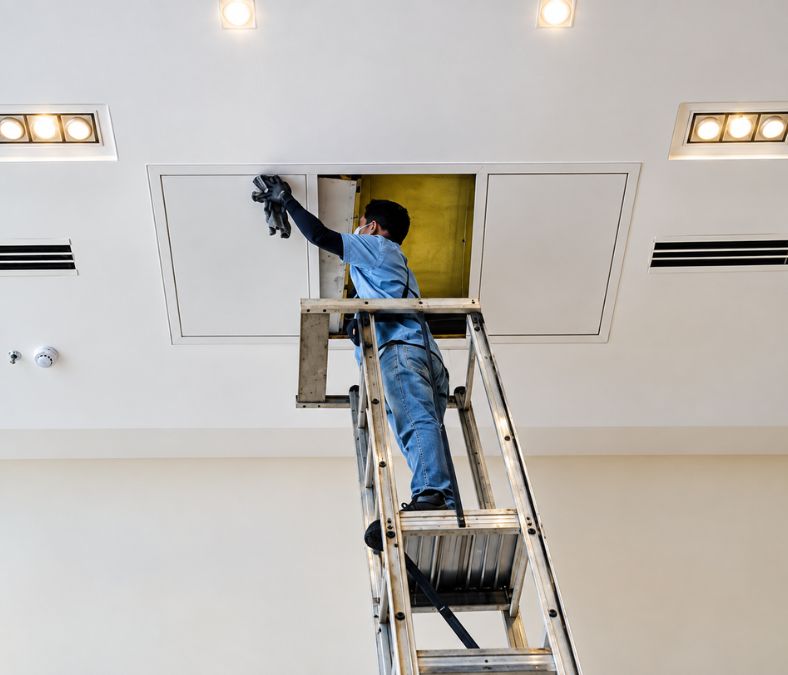
A thorough duct cleaning in Clermont FL involves more than putting a vacuum hose over a single vent. The scope should be based on the condition and design of the HVAC system.
A practical professional process generally includes:
- Inspect the system: The technician evaluates accessible ductwork and HVAC components to determine whether cleaning is justified.
- Prepare the work area: Registers, furnishings, and surrounding areas should be protected from dust and debris.
- Create controlled airflow: Appropriate vacuum equipment helps contain contaminants rather than allowing them to migrate into occupied rooms.
- Agitate and remove buildup: Specialized tools loosen accumulated particles so they can be extracted.
- Address relevant components: Depending on the system and service scope, cleaning may include registers, grilles, air-handling components, coils, drain pans, and other accessible areas.
- Inspect the finished work: A visual check helps confirm whether accessible areas have been adequately cleaned.
Homeowners looking for duct cleaning in Leesburg should apply the same principle: ask what components will actually be inspected and cleaned rather than choosing a provider based solely on a low advertised price.
Duct cleaning vs. other indoor air quality measures
Duct cleaning is useful in certain situations, but it should not be confused with filtration, humidity control, or duct repair.
| Approach | Primary Purpose | When It May Help |
|---|---|---|
| Duct cleaning | Removes accumulated debris from accessible HVAC components | Significant buildup or contamination |
| HVAC filter replacement | Captures airborne particles before they circulate | Routine HVAC maintenance |
| Duct sealing | Addresses leaks in ductwork | Poor airflow or conditioned-air loss |
| Humidity control | Manages excess indoor moisture | Persistently humid homes |
| Air purification | Targets airborne particles or selected pollutants | Specific indoor air quality concerns |
The right combination depends on what is actually happening inside the home. Cleaning heavily contaminated ducts will not correct a leaking duct system, while installing a new filter will not remove substantial debris already sitting inside inaccessible ductwork.
For broader HVAC planning, homeowners can also read Stay Comfortable in Florida: 8 HVAC Updates You Need to Know About for additional considerations involving air quality, ductwork, humidity, and system upgrades.
Conclusion: Cleaner ducts are part of a cleaner home
Professional duct cleaning can be worthwhile when your HVAC system contains substantial dust, debris, or specific contamination. It should not, however, be treated as a cure-all for every indoor air quality concern. Inspection, proper filtration, humidity control, duct maintenance, and appropriate HVAC servicing all have roles to play.
For homeowners who want a professional assessment, M&S Air Conditioning & Plumbing provides duct cleaning services throughout Leesburg and surrounding Florida communities, with a focus on inspecting and cleaning the complete system rather than treating one vent in isolation.
Key Takeaways
- Professional duct cleaning can help when HVAC systems contain substantial dust, debris, or specific contamination.
- Duct cleaning is not automatically necessary in every home and should be based on system conditions.
- Moisture control, filtration, duct sealing, and HVAC maintenance can also influence indoor air quality.
- Homeowners should choose providers who explain the cleaning scope, equipment, inspection process, and expected results.
Frequently Asked Questions:
Can professional duct cleaning improve indoor air quality?
It can help when substantial contaminants have accumulated inside the ductwork or related HVAC components. However, it is only one potential part of an indoor air quality strategy.
Does dusty furniture mean the air ducts need cleaning?
Not necessarily. Household dust can come from many sources, including outdoor particles and normal indoor activities. A professional inspection is more useful than assuming duct contamination based only on surface dust.
Is duct cleaning useful after a home renovation?
It may be worth having the system inspected after significant remodeling, particularly if construction debris could have entered the ductwork. Whether cleaning is necessary depends on what the inspection reveals.